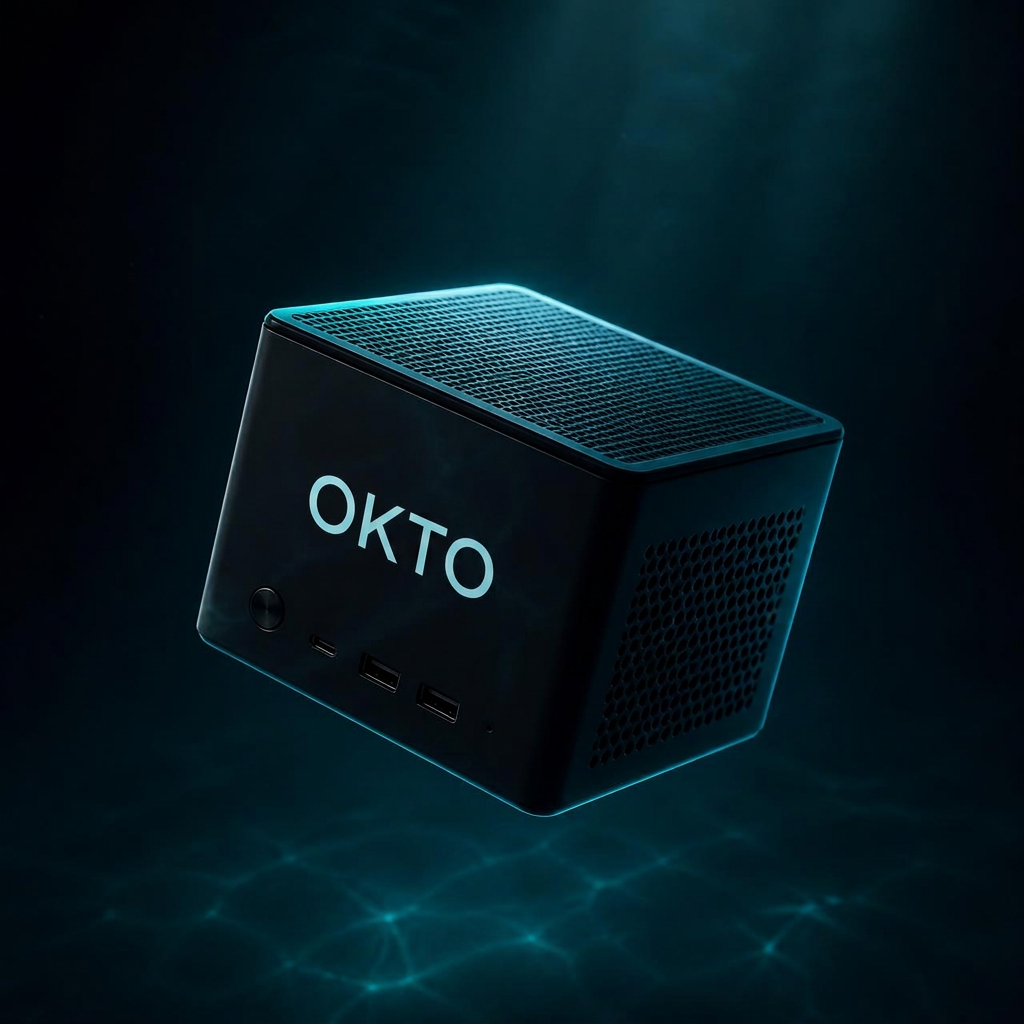
Local-First Intelligence for the Real World
Move to the Edge of Possibility
The cloud is far away. OKTO edge computing puts a thinking node exactly where the action is.
Did you know?
Edge computing, inspired by the octopus.
Long before engineers coined the term “edge computing,” evolution built a working version of it into one of the ocean's most intelligent animals — nine brains, one central and one in each of its eight arms.
Roughly two-thirds of an octopus's neurons live outside its central brain, distributed through its arms.
Each arm tastes, touches and reacts on its own — reaching for food or recoiling from a threat without waiting for instruction.
The central brain keeps the big picture, coordinating the arms and making decisions that need whole-body awareness.
From ocean to network
Process the data where the data happens.
Edge computing runs software as physically close as possible to where data is generated, instead of shipping it to a distant data centre first. Less travelling means less delay, less bandwidth strain, and less dependence on a connection that may not be there.
| Era | Where computing happens | Strength | Weakness |
|---|---|---|---|
| Early computing | One isolated central machine | Simple, controlled | No mobility, no scale |
| Personal computing | Locally, on each device | Fast, independent | No coordination |
| Cloud computing | Centralised data centres | Scalable, always current | Latency, bandwidth cost, needs connectivity |
| Edge computing — OKTO | Close to the user, on the local node | Fast, resilient, private, centrally aware | Needs capable local hardware |
Why move the brain to the edge.
Lower latency
Decisions land in milliseconds because data never leaves the building, vehicle or vessel it was born in.
Lower bandwidth cost
Only meaningful, summarised data travels onward — not a constant raw stream fighting for scarce connectivity.
New functionality
Real-time analysis becomes possible where a live cloud link is slow, unreliable, or simply absent.
Resilience
The node keeps working when head office goes dark, then reconnects and syncs when the line returns.
Meet the hardware
The Tentacle Node.
A fist-sized edge computer built on the ECS LIVA Z11 PLUS platform — the mini brain of the OKTO network. Small enough to travel anywhere, powerful enough to run real workloads and on-device AI without ever touching the cloud.
- Form factor
- 0.71-litre mini PC, 114.4 × 114.4 × 54.5 mm — backpack pocket or VESA bracket
- Processor
- Intel Core Ultra, up to Core Ultra 7 255H — 16 cores / 16 threads
- On-device AI
- Integrated NPU up to 96 TOPS, paired with Intel Arc graphics
- Memory
- Dual-channel DDR5, up to 96 GB at 5600–6400 MHz
- Storage
- Two M.2 NVMe slots (PCIe Gen 4 x4), 2280 and 2242 modules
- Connectivity
- Two USB4 40 Gbps, USB 3.2 / 2.0, dual LAN, dual HDMI — four 4K displays
- Power
- External 120 W adapter — runs off a generator, solar bank or vehicle inverter
- Mounting
- VESA plate included — wall, dashboard, lab bench or field equipment
Where OKTO works
Real places. Real problems. Real edge.
OKTO nodes fit where cloud computing is too slow, too expensive, or simply impossible. Here is how organisations and founders are already putting them to work.
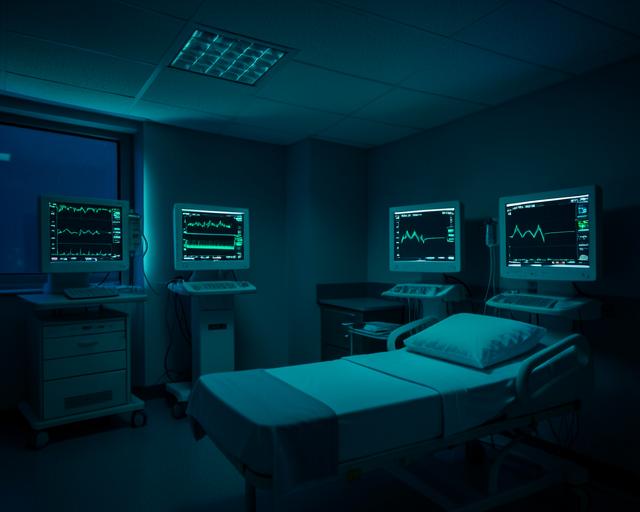
Hospital ward
Patient monitoring, imaging and sensitive records stay inside the building — fast, private and compliant.
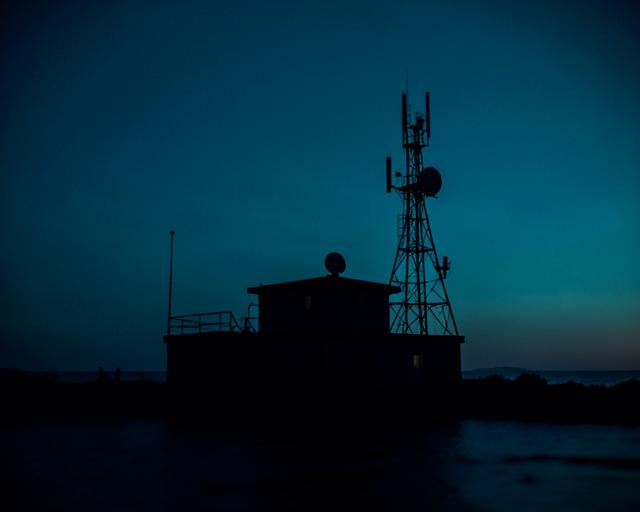
Defence outpost
Tactical awareness and secure coordination without depending on a distant data centre or contested link.
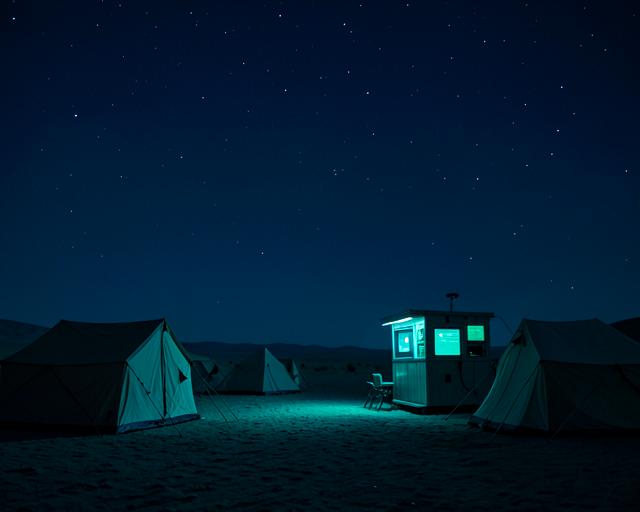
Desert field camp
Operations, logistics and local AI keep running when connectivity is intermittent or absent.

Research vessel
Sensor and camera data processed at sea, so only insights — not raw footage — travel back to shore.
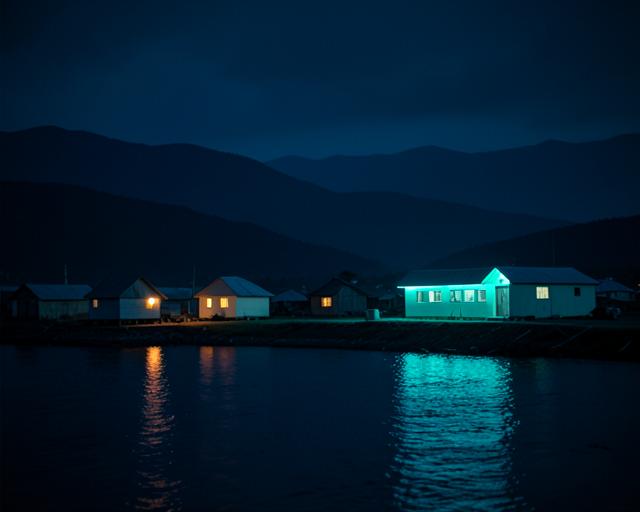
Off-grid village
Local services, education and administration without waiting for fibre trenches or fibre bills.

Solar farm + industrial park
Local energy and local compute for new economic zones — power and process data on site, independent of distant grids or clouds.
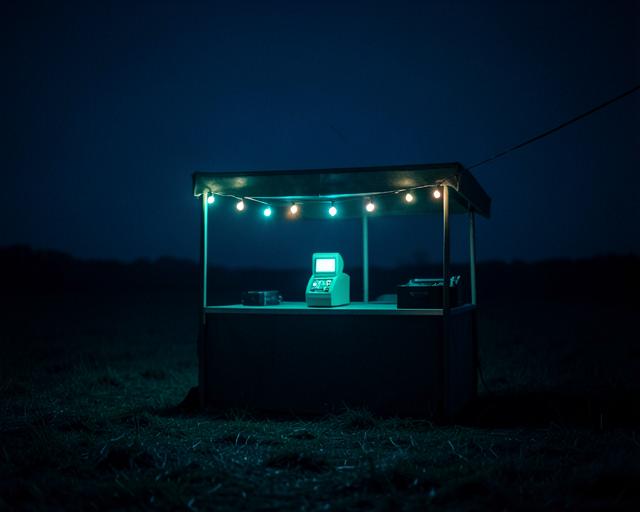
Pop-up retail
A till, stock system and customer tools that work the moment the stall opens, even in a field or car park.
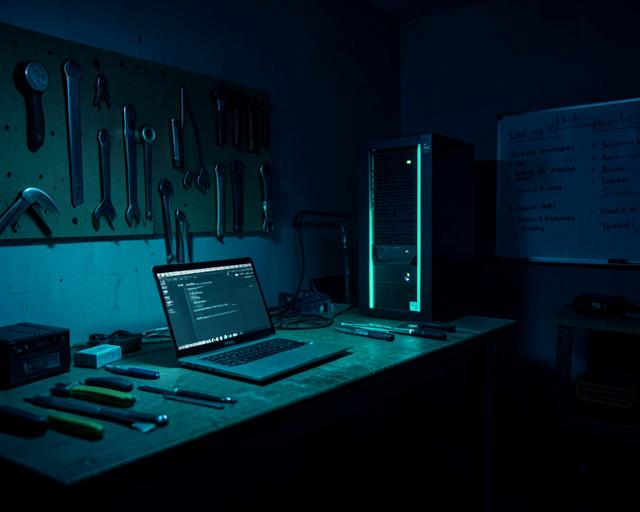
Founder's garage
A private, self-contained company HQ in one box — documents, boards, databases and whiteboards, no cloud required.
OPTIONAL CENTRAL SYNCEach site thinks locally. The centre only sees what must be shared, stored or escalated.
Built for the field
Where OKTO belongs.
Sensitive data, secured on-site
Hospitals and defence facilities process monitoring feeds, imaging and operational data locally — sensitive information stays inside the four walls it was created in.
Sovereignty for regions and nations
For countries pursuing data sovereignty, including many across Africa, edge nodes deliver modern AI capability without routing citizens' data through infrastructure governed elsewhere.
The far-flung and the extreme
A node needs power and a task, not a data centre next door — remote villages, desert camps, vessels far from shore, underwater installations, orbital platforms.
OKTO Store
Startup-in-a-Box.
New in storeThe Tentacle Node paired with Arawinz Vault — an all-in-one private workspace. Preloaded, it becomes a self-contained company headquarters: plan, document, track and manage a business entirely offline, then sync selectively when a connection appears.
You no longer need a data centre, a fibre line or a monthly cloud bill to run a business. You need a box the size of your hand.
Visit the store- Docs, boards, databases, mind maps, whiteboards and PDF tools in one private workspace, running locally on the node.
- No recurring cloud dependency — the workspace works fully offline and syncs only when the founder chooses to.
- One box, one price — hardware and software arrive ready to switch on, not to configure.
- Entrepreneurship untethered from infrastructure — a market stall or field site becomes a viable HQ.
The road ahead
Zero Distance. Local-First Intelligence.
The same architecture running a founder's workspace today scales into clinical, defence and sovereign-infrastructure deployments. Think locally, coordinate centrally, and never let distance decide what's possible.
Request the pilot programme